

An open-jaw ticket rarely costs more than a standard round-trip and saves both time and expense by avoiding retracing your steps. For this Iran travel package, which includes an overland journey, flying into Shiraz and returning home from Tehran is a smart choice.
Starting your journey in the south—the cradle of Persian empires—allows you to explore Iran’s rich history, culture, and people as you travel northward through the Zagros Mountains, deserts, and the stunning cities of Yazd, Isfahan, and Kashan.
To enhance your travel experience and provide more variety, we have included a selection of Optional Tours in the package, allowing you to tailor your journey to your own preferences. Once our daytime sightseeing ends, you’re free to choose and enjoy one of these evening activities.
Sightseeing: Karim Khan Palace, Vakil Mosque, Vakil Bazaar, Saraye Moshir, Tombs of Hafez & Saadi, Ali-Ebn-e-Hamzeh Shrine, Jahan Nama Garden, Eram Garden, Tomb of Khajou-ye Kermani
Night Optional Tours in Shiraz: Concert tour in Sang-e Siah district, Zoorkhaneh, Baba Kouhi (mountain trekking), Cinema Complex, Walking Tour, Cafe Tour
Shiraz has long been known as a center of enlightenment and culture, serving as one of Iran’s most influential cities for over 2,000 years and once even its capital. Often celebrated as the heartland of Persian culture, Shiraz evokes images of poetry, gardens, roses, and nightingales.
We begin our morning by exploring the highlights from the Zand Dynasty, when Shiraz served as the nation’s capital. Our first stops include the impressive Karim Khan Palace, the elegant Vakil Mosque, the bustling Vakil Bazaar, and Saraye Moshir, known for its beautiful architecture and traditional handicraft shops.
Next, we enjoy a delicious Iranian lunch at one of Shiraz’s traditional restaurants.
This enchanting city is also home to Iran’s most beloved poets. We will visit the tombs of Hafez and Saadi, two literary masters whose words continue to inspire readers around the world.
Hafez, admired for the depth and beauty of his poetry, rests in a tranquil garden setting that exudes peace.
Saadi -poet, philosopher, mystic, and often called the “father of tourism”- traveled widely seven centuries ago and recorded his experiences in his masterpieces Bustan and Golestan, which remain rich sources of wisdom and inspiration.
In the evening, we visit the stunning Eram Garden, a perfect example of a Persian garden and a UNESCO World Heritage Site. We then stop at the beautifully adorned Ali-Ebn-e-Hamzeh Shrine, known for its breathtaking mirror-work. Afterwards, we take a peaceful stroll through Jahan Nama Garden, famous for its towering cypress trees.
We end the day at the tomb of Khajou-ye Kermani, where a panoramic view of Shiraz offers a memorable final impression of this magical city.
Note: The order of sightseeing may vary depending on your arrival time, the guide’s recommendations, and official or unofficial museum holidays. Unforeseen events may cause changes to the tour itinerary.
Overnight in Shiraz
Sightseeing: Nasir Al-Mulk mosque (Pink Mosque), Persepolis, Necropolis
Our day begins with a visit to Nasir Al-Mulk Mosque (Pink Mosque), and then Persepolis, founded by Darius I in 518 B.C. as the capital of the Achaemenid Empire. Perched on a vast half-natural, half-artificial terrace, Persepolis was designed not only as a seat of government but also as a magnificent showplace for royal receptions and festivals, including the celebration of Nowruz. Its monumental ruins reflect extraordinary craftsmanship, making it a truly unique archaeological site.
Next, we visit the Necropolis, located just ten minutes north, opposite Mount Rahmat. This grand burial site of the Achaemenid kings also features seven bas-reliefs dating back to the Elamite and Sassanid periods.
Overnight in Shiraz
Sightseeing: Pasargadae, Abarkuh (Ancient Living Cypress Tree, Icehouse, Gonbad-e Aali, Nizamiyyah School)
Today, we depart Shiraz in the morning and head toward Abarkuh, with our first stop at Pasargadae, the ancient capital of the Achaemenid Empire under Cyrus the Great (559–530 B.C.). Here, we will explore some of its most majestic monuments, including the Tomb of Cyrus the Great, the empire’s founding ruler. This remarkable tomb, set amidst expansive fertile lands, is a masterpiece of ancient architecture and served as a place of worship for followers of multiple religions. Today, it stands as an archaeological treasure and a UNESCO World Heritage Site.
Continuing to Abarkuh, a historic city at an altitude of 1,510 meters, we will visit:
The Ancient Living Cypress Tree, estimated to be 4,500 years old. This venerable tree symbolizes endurance and the harmony between nature and favorable environmental conditions.
The Abarkuh Icehouse, a traditional structure used to store ice year-round before the invention of modern refrigeration. Icehouses often featured underground chambers or insulated buildings near natural ice sources.
Gonbad-e Aali (Aali Dome), the town’s oldest surviving structure dating back to the 11th century (Dailamite period). This early tomb tower sits atop a hill on the outskirts of Abarkuh.
The Nizamiyyah School, one of the earliest medieval higher education institutions in Iran, founded by Khwaja Nizam al-Mulk during the Seljuk Empire. These Sunni theological schools became models for later Islamic educational institutions.
For your overnight stay in Abarkuh, we highly recommend the Aghazadeh Boutique Hotel, one of Iran’s most distinguished traditional hotels, offering an authentic and comfortable experience.
Note: If the group is large, we will stay in one of the traditional hotels in Yazd.
Sightseeing : Mehriz, Saryazd Castle,Bagh-e Pahlavan (Pahlavan Garden), Zoroastrian Towers of Silence & Fire Temple, Amir Chakhmaq Complex
Night Optional Tours in Yazd : Sindbad or Shabahang desert camp, Chak ckak & kharanagh excursion
We would start the day with a visit to Saryazd Caravanserai which dates back to Seljuk and Safavid era. Another historic place out there is a castle belonging to Sassanid era which is used as a haven in time of war.
Then we head for Mehriz, a city located 30 kilometers south of Yazd. Mehriz consists of one central district and five village centers. According to historians, the name belongs to "Mehrnegar" the beloved daughter of Anoushirvan, the Sassanid King. Mehriz was known, during the late Sassanid era (4th century AD), as a natural pleasant area. We will also visit Bagh-e Pahlavan (Pahlavan Garden) and some ancient water and irrigation system called Qanat which is also a UNESCO heritage.
Finally we continue all the way to Yazd and check into the hotel. In the afternoon, we will pay a visit to Zoroastrian Towers of Silence; circular raised structures built by Zoroastrians for excarnation (for dead bodies to be exposed to carrion birds), and Fire Temple; the place of worship for Zoroastrians. At night, we will visit Amir Chakhmaq Complex; a prominent structure noted for its symmetrical sunken alcoves. It is a mosque located on a square of the same name. It also contains a caravanserai, a tekyeh (a place where Shiite gather for mourning of Muharram), a bathhouse, a cold water well, and a confectionery. At night, the building is lit up after twilight hours after sun set with orange lighting in the arched alcoves which makes it a spectacle.
Overnight in Yazd
Sightseeing: Narin Castle of Meybod, Jame Mosque of Nain and traditional abaya-weaving workshop in Nain
Night Optional Tours in Isfahan: Visit Khajoo Bridge, known for its lively evening singing, Sofeh Park, and Traditional Hammam
Today we depart Yazd at 8:00 AM and head toward the enchanting city of Isfahan (approx. 320 km). Along the scenic route, we’ll explore some of Iran’s most captivating historical and natural treasures.
Our first stop is Meybod, located in the heart of Yazd province, is a timeless desert city where history and culture come alive. From the impressive Narin Castle—one of Iran’s oldest mud-brick fortresses—to the elegant Pigeon Tower and the traditional Yakhchal icehouse, every corner tells a unique story. Strolling through its charming alleys, you’ll discover authentic crafts like exquisite pottery and handmade textiles. Meybod is a perfect destination for travelers seeking peaceful landscapes, ancient architecture, and an authentic taste of Iranian desert life.
Our second visit would be Naien, one of Iran’s oldest cities and a living testament to ancient Persian ingenuity. Here, we’ll discover the remarkable underground qanat system — a 3,000-year-old engineering marvel that once supplied over 70% of Iran’s water. We’ll visit a traditional abaya-weaving workshop, where skilled artisans craft the elegant, flowing black cloaks worn by many Iranian women, and explore the magnificent Jame Mosque of Nain — one of the oldest mosques in Iran. Dating back to the 9th–11th centuries, this beautifully preserved gem showcases exquisite Seljuk brickwork, intricate stone and wood carvings, and the distinctive “Khorasani” architectural style blending pre-Islamic and early Islamic influences. Remarkably, it remains an active place of worship today.
Overnight in Isfahan
Sightseeing: Vank Cathedral, Si-o-seh Pol bridge, Chaharbagh Abbasi, Naqsh-e Jahan Square, Aliqapoo Palace, Shah Abbas Mosque
Isfahan—often described as “Half the World”—is a legendary city that never fails to enchant its visitors. Known as the jewel of traditional Islamic architecture, Isfahan is also a vibrant center where history and contemporary arts blend beautifully. Famous for its magnificent palaces, elegant gardens, and serene atmosphere, the city has captivated travelers for centuries.
Our first visit would be Vank Cathedral, one of the most beautiful Armenian churches in the world, renowned for its intricate frescoes, gilded decorations, and peaceful courtyard. It is a profound cultural and spiritual landmark that captivates visitors—especially Christian travelers.
We will the visit iconic Si-o-seh Pol (Allahverdi Khan Bridge), the celebrated “Bridge of Thirty-Three Arches.” This masterpiece of Safavid engineering spans the Zayandehroud River at a length of nearly 298 meters, making it the longest and one of the most elegant bridges in Isfahan.
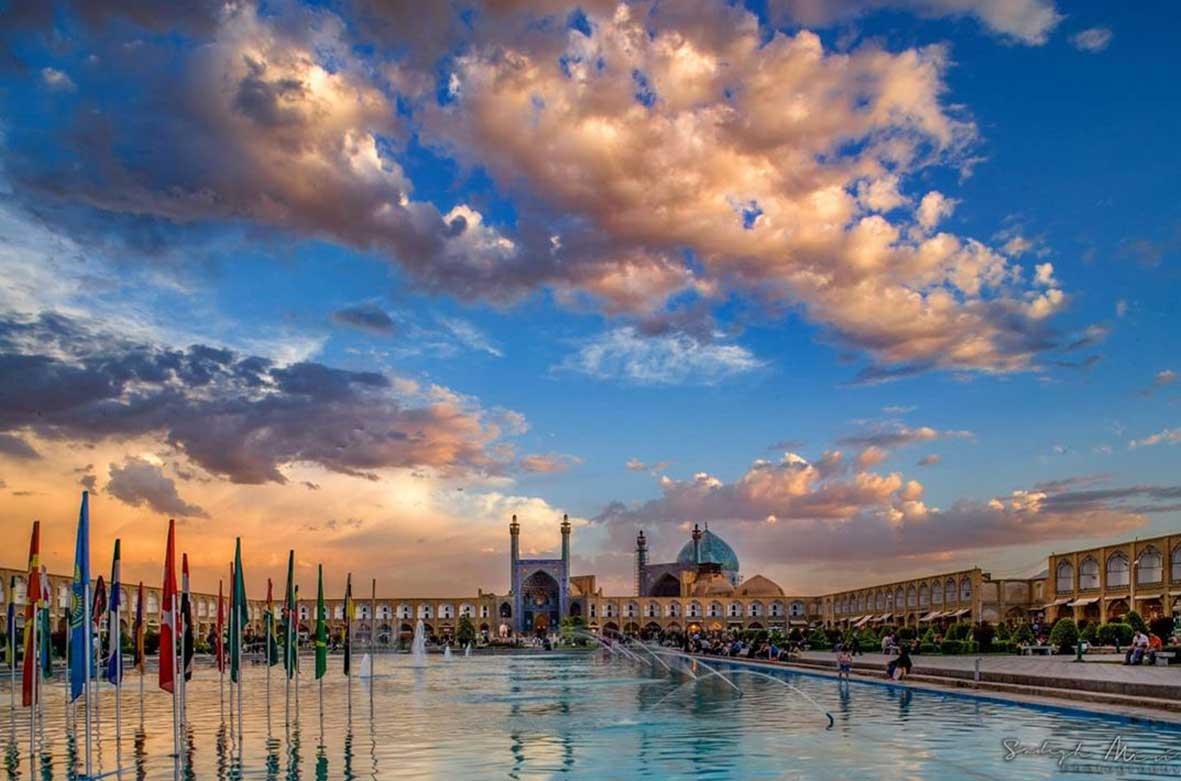
Later, we’ll stroll along Chaharbagh-e Abbasi, one of Isfahan’s most charming historic streets, leading to Naqsh-e Jahan Square to visit Ali Qapu Palace and Shah Abbas Mosque.
Naqsh-e Jahan Square is one of the largest and most impressive squares on the planet, second in size only to Beijing’s Tiananmen Square. Surrounding the square are some of the most stunning architectural masterpieces of the Safavid era.
Next, we explore Ali Qapu Palace, whose name combines the Persian “Ālī” (imperial or great) and the Azerbaijani “Qāpū” (gate). As the grand gateway to the royal palaces stretching from Naqsh-e Jahan Square to Chahar Bagh Strret, Ali Qapu served as a ceremonial entrance and an elevated viewpoint for watching polo matches and festivities in the square.
We continue our tour with visits to two of the city’s most extraordinary religious landmarks: Shah Abbas Mosque, a masterpiece of tilework, calligraphy, and harmonious.
Overnight in Isfahan
Sightseeing: Chehel Sotoun Palace, Sheikh Lotfollah Mosque, Jame (Grand) Mosque, Music Museum
Our full-day tour begins at the graceful Chehel Sotoun Palace, a royal pavilion set within a peaceful garden at the end of a long reflecting pool. Built by Shah Abbas II for court ceremonies and royal receptions, the palace gets its name—“Forty Columns”—from the twenty wooden pillars at its entrance that, when reflected in the pool, appear as forty.
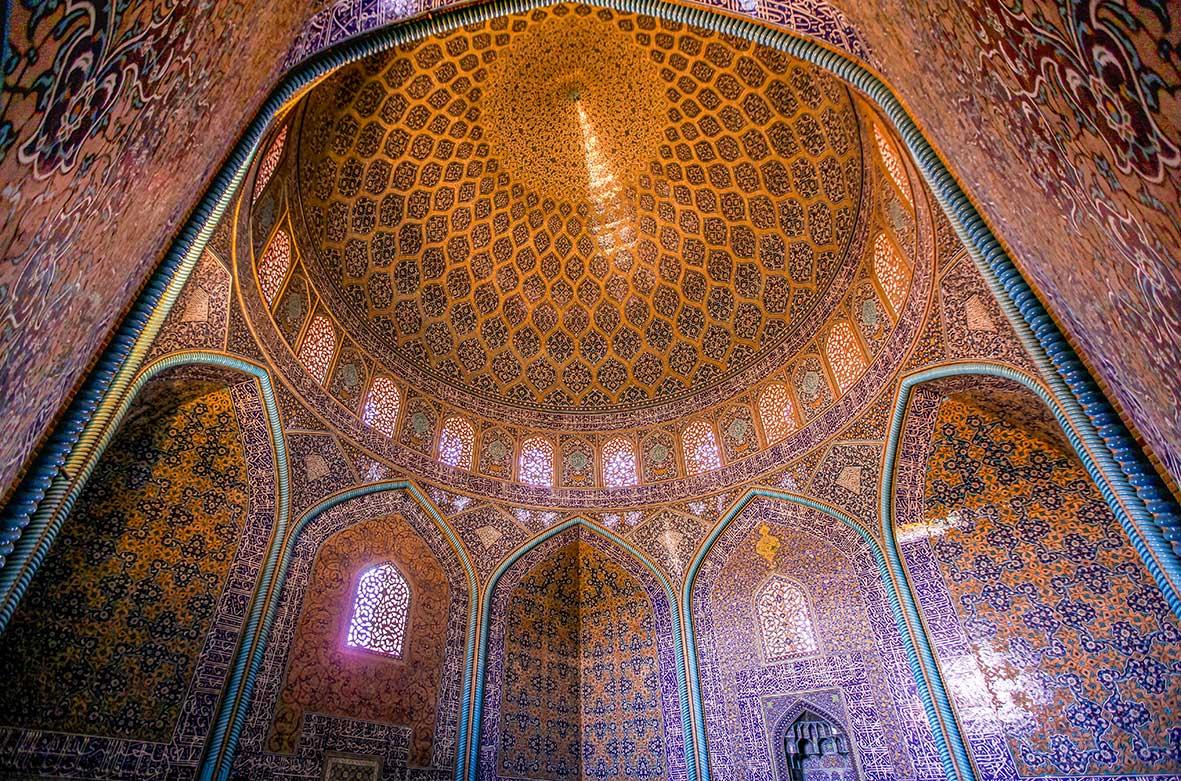
Next, we’ll visit Sheykh Lotfollah Mosque, a masterpiece of Persian architecture, famed for its intricate tilework, elegant dome, and serene, awe-inspiring beauty.
Our visit continues at Isfahan’s Grand Mosque, a stunning example of Persian architecture, where you can admire its magnificent domes, intricate brickwork, and centuries-old artistry that reflect the city’s rich spiritual and cultural heritage.
Our final visit of the day is the Isfahan Music Museum, where you can explore a fascinating collection of traditional instruments and discover the rich musical heritage of the country.
Overnight in Isfahan
Sightseeing: Abyaneh village (on the way to Kashan), Aghabozorg Mosque
Night Optional Tour : Maranjab desert
Today, instead of the highway, we will choose the old Kashan route, passing through several villages and settlements to add charm and interest to the journey. We drive to towards Kashan via Toroghrood and Hanjen village.
We then continue to the UNESCO-recognized village of Abyaneh, situated in the Barzrud Rural District at the foothills of Mount Karkas and near the central desert. At the top of the village lie the remnants of a Sassanid-era fort, bearing witness to its long history. The people of Abyaneh speak a distinctive dialect that has preserved many features of Middle Persian—the language of Sassanian Iran.
We take time to enjoy the tranquility of this picturesque village, admire its unique architecture, and meet the friendly locals who still speak, live, and dress in traditional Persian style. The red-mud houses, stepped alleys, and cultural authenticity make Abyaneh a truly memorable stop.
By late afternoon, we arrive in Kashan and check into the hotel.
Overnight in Kashan
Sightseeing: Borujerdiha House, Tabatabaei House, Fin Garden
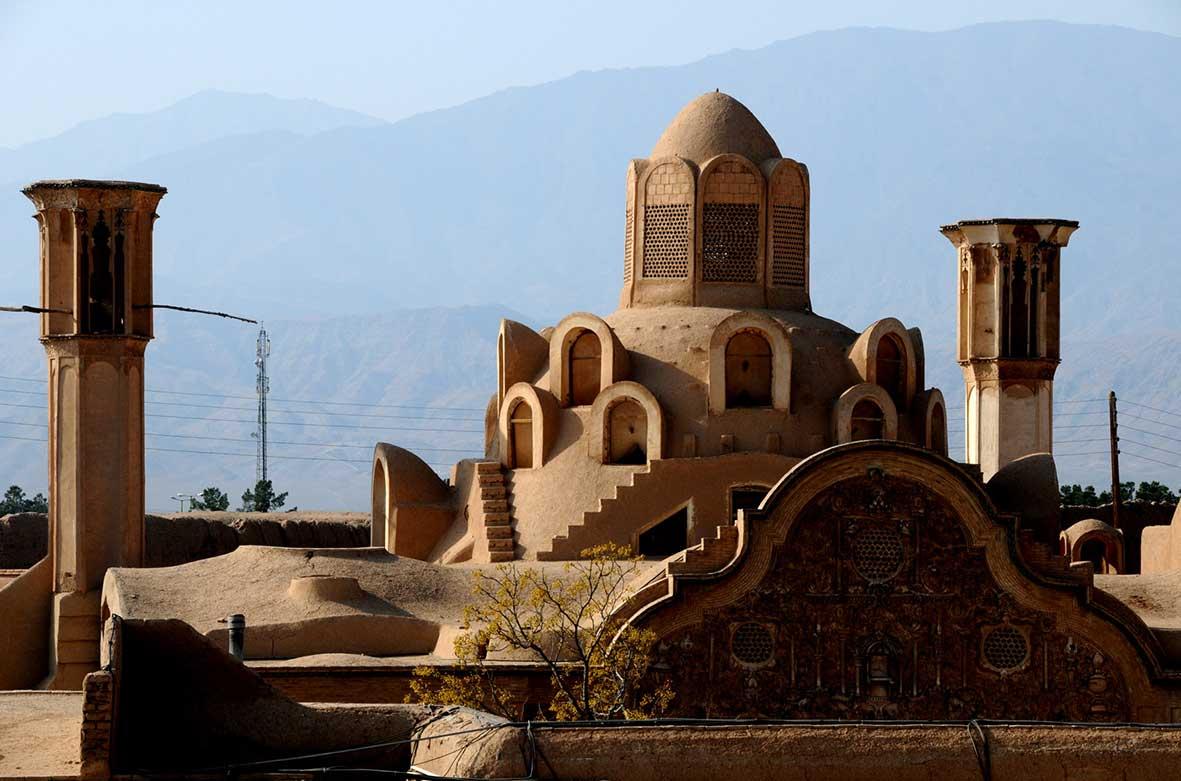
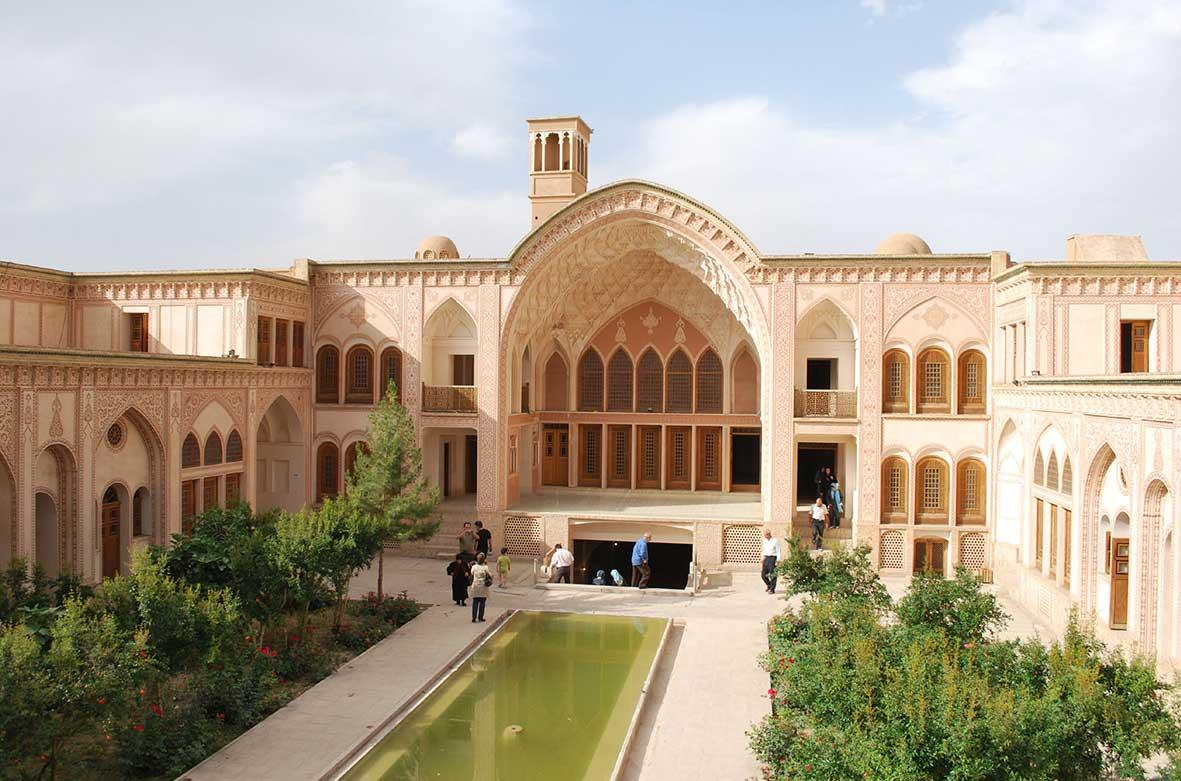
We begin our day with a visit to Kashan’s most celebrated historic mansions: the Borujerdiha House and the Tabatabaei House. These elegant residences showcase the refined architectural style of the Qajar era, with their intricate stucco work, stained-glass windows, and exquisite courtyards that reflect the lifestyle of wealthy merchant families of the time.
Our next stop is the renowned Fin Garden, a masterpiece of classical Persian garden design and the oldest surviving Persian garden, completed in 1590. Within the complex lies the historic Fin Bath, where the esteemed Qajar chancellor Amir Kabir was tragically assassinated on the orders of King Nasereddin Shah in 1852. The garden’s flowing water channels, ancient cypress trees, and architectural harmony offer a serene and memorable experience.
After lunch, we depart Kashan and make our way toward Tehran and we can choose one of the optional tours in Tehran.
Night Optional Tours in Tehran: Visiting Nature Bridge (Pol-e Tabiat), Darband, Tajrish bazaar, Azadi square, Charming Cafés in Tehran
Overnight in Tehran
Sightseeing: Carpet Museum, Sa’ad Abad Complex, Reza Abbasi Museum
Today, we would do a city tour in Iran’s capital. To make the most of the day and avoid heavy traffic, we’ll use the subway and chartered taxis. This not only saves time but also gives you a great opportunity to interact with local people and experience everyday life in Tehran.
Our tour begins at 9:30 AM with a visit to the Carpet Museum of Iran, home to more than 100 stunning carpets and rugs from across the country. Here, you’ll gain insight into the artistry, craftsmanship, and history behind Persian hand-woven carpets.
Next, we explore the expansive Sa’ad Abad Complex, covering 1,100,000 square meters and featuring 18 historic palaces—two of which we will tour. Originally built by Qajar monarchs in the 19th century, the complex was later used by Reza Shah and Mohammad Reza Shah of the Pahlavi dynasty before being converted into a museum after the 1979 Revolution. Its grandeur and history make it one of Tehran’s most impressive landmarks.
Following our visit, we’ll enjoy a delicious Iranian lunch at a traditional restaurant.
In the afternoon, we head to the Reza Abbasi Museum, named after the renowned Safavid-era artist. The museum displays an exceptional collection of Persian art spanning from the 2nd millennium BC to the Islamic period, offering a deep look into Iran’s artistic heritage.
Overnight in Tehran
Sightseeing: National Museum of Iran, Golestan Palace, Bazaar, National Jewelry Museum
We begin the morning with a visit to the National Museum of Iran, consisting of two main sections: the Museum of Ancient Iran (opened in 1937) and the Museum of the Islamic Era (opened in 1972). Together, they house an extraordinary collection of historical artifacts—including pottery, metalwork, textiles, rare books, and ancient coins—offering a remarkable journey through Iran’s ancient and medieval heritage. Through these displays, we gain a vivid picture of the evolution of civilization in this region.
Our next stop is the magnificent Golestan Palace, the former Qajar royal complex and one of Tehran’s oldest and most celebrated monuments. This UNESCO World Heritage Site includes elegant halls, beautiful gardens, and collections showcasing Iranian craftsmanship as well as European gifts from the 18th and 19th centuries.
We then take a stroll through the bustling Tehran Bazaar, the economic heartbeat of the city. More than just a marketplace, the bazaar is a vibrant social hub where daily life unfolds—people gather, interact, and shape the cultural and political landscape of the city. After our walk, we enjoy lunch at a local restaurant.
Our Tehran sightseeing concludes with a visit to the National Jewelry Museum, home to an unrivaled collection of priceless jewels. Among its treasures is the famed Darya-e-Noor “Sea of Light”, one of the world’s most renowned diamonds. (The museum is only open on Saturdays to Tuesdays from 13:00 to 16:00).
In the late afternoon, we head to the Tehran international airport airport, leaving Iran with unforgettable memories.
Note: In this tour, a hotel for this final night is not included. However, upon request, we can arrange a room at an IKA airport hotel for a few hours or for the entire night, depending on your departure time.