

This tour of Iran takes you not only to the country’s major cities and their unique tourist attractions, but also to western Iran, including Kermanshah and Bisotun, where the famous and highly elaborate romantic legend of Shirin and Farhad is set. In addition, this tour includes a visit to Iranian Kurdistan.
To enhance your travel experience and provide more variety, we have included a selection of Optional Tours in the package, allowing you to tailor your journey to your own preferences. Once our daytime sightseeing ends, you’re free to choose and enjoy one of these evening activities.
Sightseeing: National Museum of Iran, Golestan Palace, Bazaar, National Jewelry Museum
Upon your pre-dawn arrival at Tehran airport, our representative carrying our show card (transfer Upon your pre-dawn arrival at Tehran airport, our representative carrying our show card (transfer information) will meet you and transfer you to your hotel. You will have time to rest and relax before our morning tour of Tehran begins.
To avoid heavy traffic, taking the subway is the best way to visit Tehran. We take the subway and charter taxis so that we make most of the day and visit as many sites as possible.
We begin the morning with a visit to the National Museum of Iran, consisting of two main sections: the Museum of Ancient Iran (opened in 1937) and the Museum of the Islamic Era (opened in 1972). Together, they house an extraordinary collection of historical artifacts—including pottery, metalwork, textiles, rare books, and ancient coins—offering a remarkable journey through Iran’s ancient and medieval heritage. Through these displays, we gain a vivid picture of the evolution of civilization in this region.
Our next stop is the magnificent Golestan Palace, the former Qajar royal complex and one of Tehran’s oldest and most celebrated monuments. This UNESCO World Heritage Site includes elegant halls, beautiful gardens, and collections showcasing Iranian craftsmanship as well as European gifts from the 18th and 19th centuries.
We then take a stroll through the bustling Tehran Bazaar, the economic heartbeat of the city. More than just a marketplace, the bazaar is a vibrant social hub where daily life unfolds—people gather, interact, and shape the cultural and political landscape of the city. After our walk, we enjoy lunch at a local restaurant.
Our Tehran sightseeing concludes with a visit to the National Jewelry Museum, home to an unrivaled collection of priceless jewels. Among its treasures is the famed Darya-e-Noor “Sea of Light”, one of the world’s most renowned diamonds. (The museum is only open on Saturdays to Tuesdays from 13:00 to 16:00). In the late afternoon, we transfer to the airport for our flight to Shiraz.
Overnight in Shiraz
Night Optional Tours in Shiraz: Concert tour in Sang-e Siah district, Zoorkhaneh, Baba Kouhi (mountain trekking), Cinema Complex, Walking Tour, Cafe Tour
Sightseeing: Karim Khan Palace, Vakil Mosque, Vakil Bazaar, Saraye Moshir, Tombs of Hafez & Saadi, Ali-Ebn-e-Hamzeh Shrine, Jahan Nama Garden, Eram Garden, Tomb of Khajou-ye Kermani
Shiraz has long been known as a center of enlightenment and culture, serving as one of Iran’s most influential cities for over 2,000 years—and once even its capital. Often celebrated as the heartland of Persian culture, Shiraz evokes images of poetry, gardens, roses, and nightingales.
We begin our morning by exploring the highlights from the Zand Dynasty, when Shiraz served as the nation’s capital. Our first stops include the impressive Karim Khan Palace, the elegant Vakil Mosque, the bustling Vakil Bazaar, and Saraye Moshir, known for its beautiful architecture and traditional handicraft shops.
Next, we enjoy a delicious Iranian lunch at one of Shiraz’s traditional restaurants.
This enchanting city is also home to Iran’s most beloved poets. We will visit the tombs of Hafez and Saadi, two literary masters whose words continue to inspire readers around the world.
Hafez, admired for the depth and beauty of his poetry, rests in a tranquil garden setting that exudes peace.
Saadi—poet, philosopher, mystic, and often called the “father of tourism”—traveled widely seven centuries ago and recorded his experiences in his masterpieces Bustan and Golestan, which remain rich sources of wisdom and inspiration.
In the evening, we visit the stunning Eram Garden, a perfect example of a Persian garden and a UNESCO World Heritage Site. We then stop at the beautifully adorned Ali-Ebn-e-Hamzeh Shrine, known for its breathtaking mirror-work. Afterwards, we take a peaceful stroll through Jahan Nama Garden, famous for its towering cypress trees.
We end the day at the tomb of Khajou-ye Kermani, where a panoramic view of Shiraz offers a memorable final impression of this magical city.
Overnight in Shiraz
Sightseeing: Nasir Al-Mulk mosque (Pink Mosque), Persepolis, Necropolis
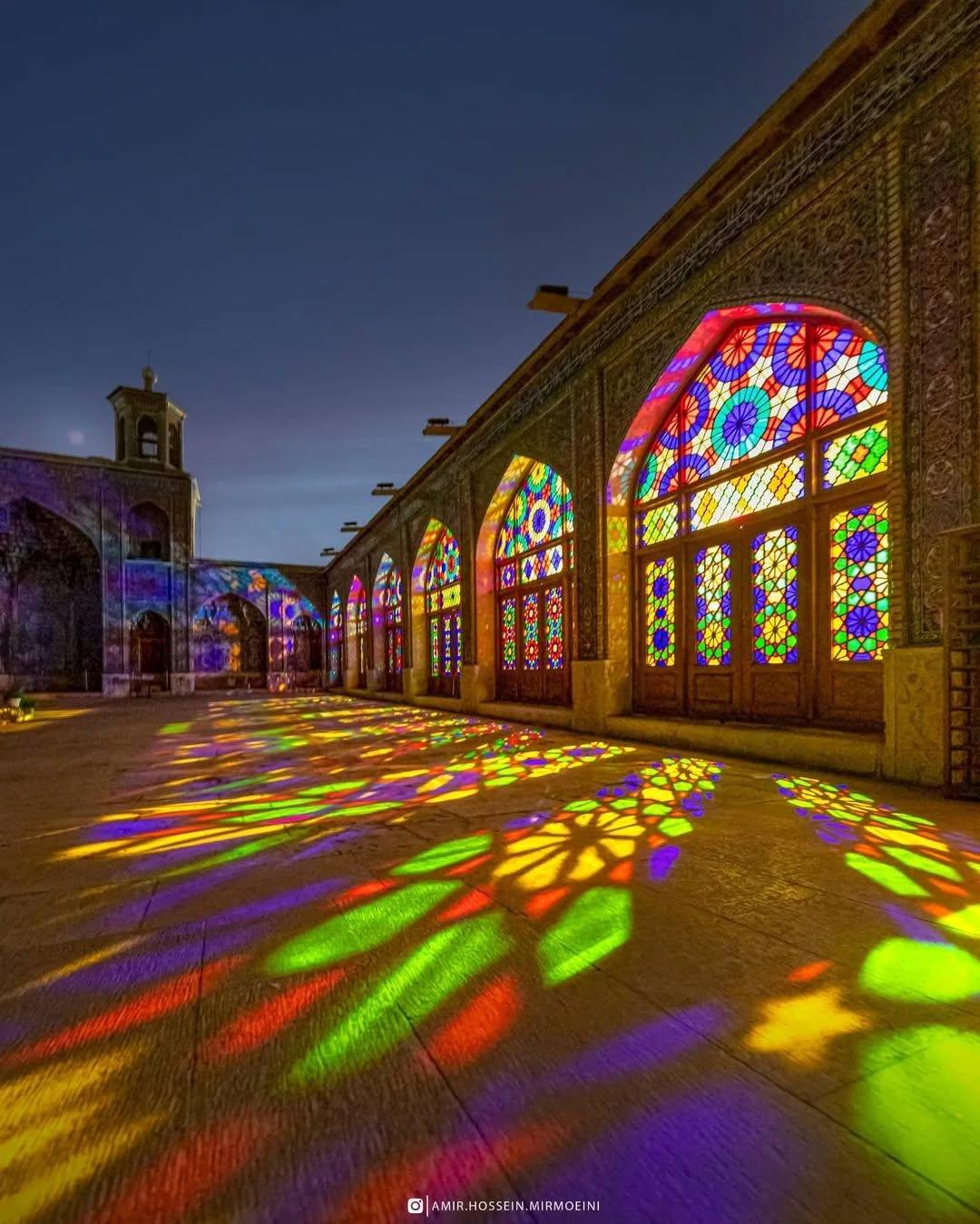
Our day begins with a visit to Nasir Al-Mulk Mosque (Pink Mosque), and then Persepolis, founded by Darius I in 518 B.C. as the capital of the Achaemenid Empire. Perched on a vast half-natural, half-artificial terrace, Persepolis was designed not only as a seat of government but also as a magnificent showplace for royal receptions and festivals, including the celebration of Nowruz. Its monumental ruins reflect extraordinary craftsmanship, making it a truly unique archaeological site.
Next, we visit the Necropolis, located just ten minutes north, opposite Mount Rahmat. This grand burial site of the Achaemenid kings also features seven bas-reliefs dating back to the Elamite and Sassanid periods.
Overnight in Shiraz
Sightseeing: Pasargadae, Abarkuh (Ancient Living Cypress Tree, Icehouse, Gonbad-e Aali, Nizamiyyah School)
Today, we depart Shiraz in the morning and head toward Abarkuh, with our first stop at Pasargadae, the ancient capital of the Achaemenid Empire under Cyrus the Great (559–530 B.C.). Here, we will explore some of its most majestic monuments, including the Tomb of Cyrus the Great, the empire’s founding ruler. This remarkable tomb, set amidst expansive fertile lands, is a masterpiece of ancient architecture and served as a place of worship for followers of multiple religions. Today, it stands as an archaeological treasure and a UNESCO World Heritage Site.
Continuing to Abarkuh, a historic city at an altitude of 1,510 meters, we will visit:
The Ancient Living Cypress Tree, estimated to be 4,500 years old. This venerable tree symbolizes endurance and the harmony between nature and favorable environmental conditions.
The Abarkuh Icehouse, a traditional structure used to store ice year-round before the invention of modern refrigeration. Icehouses often featured underground chambers or insulated buildings near natural ice sources.
Gonbad-e Aali (Aali Dome), the town’s oldest surviving structure dating back to the 11th century (Dailamite period). This early tomb tower sits atop a hill on the outskirts of Abarkuh.
The Nizamiyyah School, one of the earliest medieval higher education institutions in Iran, founded by Khwaja Nizam al-Mulk during the Seljuk Empire. These Sunni theological schools became models for later Islamic educational institutions.
For your overnight stay in Abarkuh, we highly recommend the Aghazadeh Boutique Hotel, one of Iran’s most distinguished traditional hotels, offering an authentic and comfortable experience.
Note: If the group is large or the hotel is not available, we will stay in one of the traditional hotels in Yazd.
Sightseeing: Zoroastrian Towers of Silence & Fire Temple, Amir Chakhmaq Complex, Jame Mosque of Yazd
Night Optional Tours in Yazd : Sindbad or Shabahang desert camp, Chak ckak & kharanagh excursion
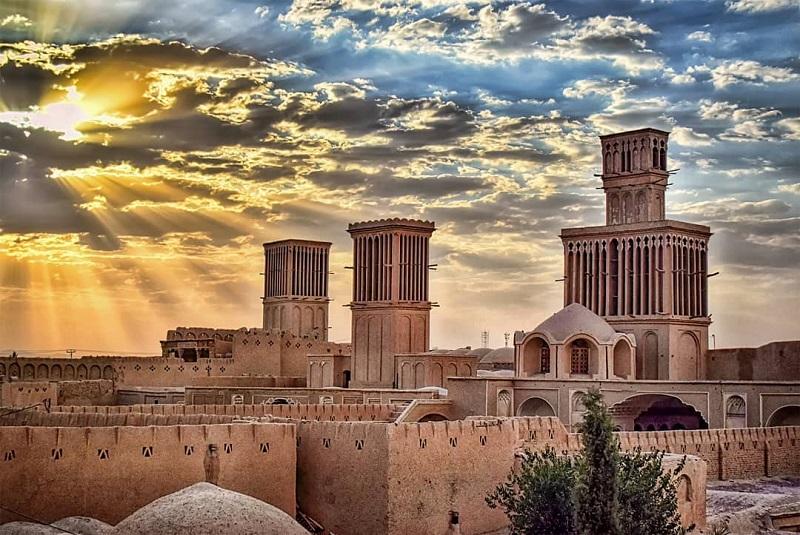
Today in Yazd, we will pay a visit to Zoroastrian Towers of Silence; circular raised structures built by Zoroastrians for excarnation (for dead bodies to be exposed to carrion birds), and Fire Temple; the place of worship for Zoroastrians. At night, we will visit Amir Chakhmaq Complex; a prominent structure noted for its symmetrical sunken alcoves. It is a mosque located on a square of the same name. It also contains a caravanserai, a tekyeh (a place where Shiite gather for mourning of Muharram), a bathhouse, a cold water well, and a confectionery. At night, the building is lit up after twilight hours after sun set with orange lighting in the arched alcoves which makes it a spectacle.
We will also explore one of Yazd’s most iconic and awe-inspiring landmarks: the Jame Mosque of Yazd. As we approach this magnificent masterpiece, its towering minarets—the tallest in Iran—rise gracefully above the city, guiding us toward a place where history, faith, and artistry blend seamlessly. Stepping inside, we are welcomed by the mosque’s mesmerizing turquoise-blue tilework, intricate geometric patterns, and a serene courtyard that reflects centuries of devotion and craftsmanship. The stunning main entrance, with its grand portal and dazzling mosaic decorations, is a true testament to the brilliance of Persian-Islamic architecture.
While exploring its calm interior and beautifully illuminated prayer hall, we can feel the timeless spirit of Yazd’s desert culture echoing through every arch and inscription. This visit allows us not only to admire one of Iran’s architectural gems, but also to connect with the rich cultural and spiritual heritage that has shaped this ancient city.
Overnight in Yazd
Sightseeing: Narin Castle of Meybod, Jame Mosque of Naien and traditional abaya-weaving workshop in Nain
Night Optional Tours in Isfahan: Visit Khajoo Bridge, known for its lively evening singing, Sofeh Park, and Ttraditional Hammam
Today we depart Yazd at 8:00 AM and head toward the enchanting city of Isfahan (approx. 320 km). Along the scenic route, we’ll explore some of Iran’s most captivating historical and natural treasures.
Our first stop is Meybod, located in the heart of Yazd province, is a timeless desert city where history and culture come alive. From the impressive Narin Castle—one of Iran’s oldest mud-brick fortresses—to the elegant Pigeon Tower and the traditional Yakhchal icehouse, every corner tells a unique story. Strolling through its charming alleys, you’ll discover authentic crafts like exquisite pottery and handmade textiles. Meybod is a perfect destination for travelers seeking peaceful landscapes, ancient architecture, and an authentic taste of Iranian desert life.
Our second visit would be Naien, one of Iran’s oldest cities and a living testament to ancient Persian ingenuity. Here, we’ll discover the remarkable underground qanat system — a 3,000-year-old engineering marvel that once supplied over 70% of Iran’s water. We’ll visit a traditional abaya-weaving workshop, where skilled artisans craft the elegant, flowing black cloaks worn by many Iranian women, and explore the magnificent Jame Mosque of Nain — one of the oldest mosques in Iran. Dating back to the 9th–11th centuries, this beautifully preserved gem showcases exquisite Seljuk brickwork, intricate stone and wood carvings, and the distinctive “Khorasani” architectural style blending pre-Islamic and early Islamic influences. Remarkably, it remains an active place of worship today.
Arrival in Isfahan in the late afternoon. You’ll have a chance to join one of the optional tours in Isfahan.
Overnight in Isfahan
Sightseeing: Vank Cathedral, Si-o-seh Pol bridge, Chaharbagh Abbasi, Naqsh-e Jahan Square, Aliqapoo Palace, Shah Abbas Mosque
Isfahan—often described as “Half the World”—is a legendary city that never fails to enchant its visitors. Known as the jewel of traditional Islamic architecture, Isfahan is also a vibrant center where history and contemporary arts blend beautifully. Famous for its magnificent palaces, elegant gardens, and serene atmosphere, the city has captivated travelers for centuries.
Our first visit would be Vank Cathedral, one of the most beautiful Armenian churches in the world, renowned for its intricate frescoes, gilded decorations, and peaceful courtyard. It is a profound cultural and spiritual landmark that captivates visitors—especially Christian travelers.
We will the visit iconic Si-o-seh Pol (Allahverdi Khan Bridge), the celebrated “Bridge of Thirty-Three Arches.” This masterpiece of Safavid engineering spans the Zayandehroud River at a length of nearly 298 meters, making it the longest and one of the most elegant bridges in Isfahan.
Later, we’ll stroll along Chaharbagh-e Abbasi, one of Isfahan’s most charming historic streets, leading to Naqsh-e Jahan Square to visit Ali Qapu Palace and Shah Abbas Mosque.
Naqsh-e Jahan Square is one of the largest and most impressive squares on the planet, second in size only to Beijing’s Tiananmen Square. Surrounding the square are some of the most stunning architectural masterpieces of the Safavid era.
Next, we explore Ali Qapu Palace, whose name combines the Persian “Ālī” (imperial or great) and the Azerbaijani “Qāpū” (gate). As the grand gateway to the royal palaces stretching from Naqsh-e Jahan Square to Chahar Bagh Strret, Ali Qapu served as a ceremonial entrance and an elevated viewpoint for watching polo matches and festivities in the square.
We continue our tour with visits to two of the city’s most extraordin ary religious landmarks: Shah Abbas Mosque, a masterpiece of tilework, calligraphy, and harmonious.
Overnight in Isfahan
Sightseeing: Chehel Sotoun Palace, Sheikh Lotfollah Mosque, Jame (Grand) Mosque, Music Museum
Our full-day tour begins at the graceful Chehel Sotoun Palace, a royal pavilion set within a peaceful garden at the end of a long reflecting pool. Built by Shah Abbas II for court ceremonies and royal receptions, the palace gets its name—“Forty Columns”—from the twenty wooden pillars at its entrance that, when reflected in the pool, appear as forty.
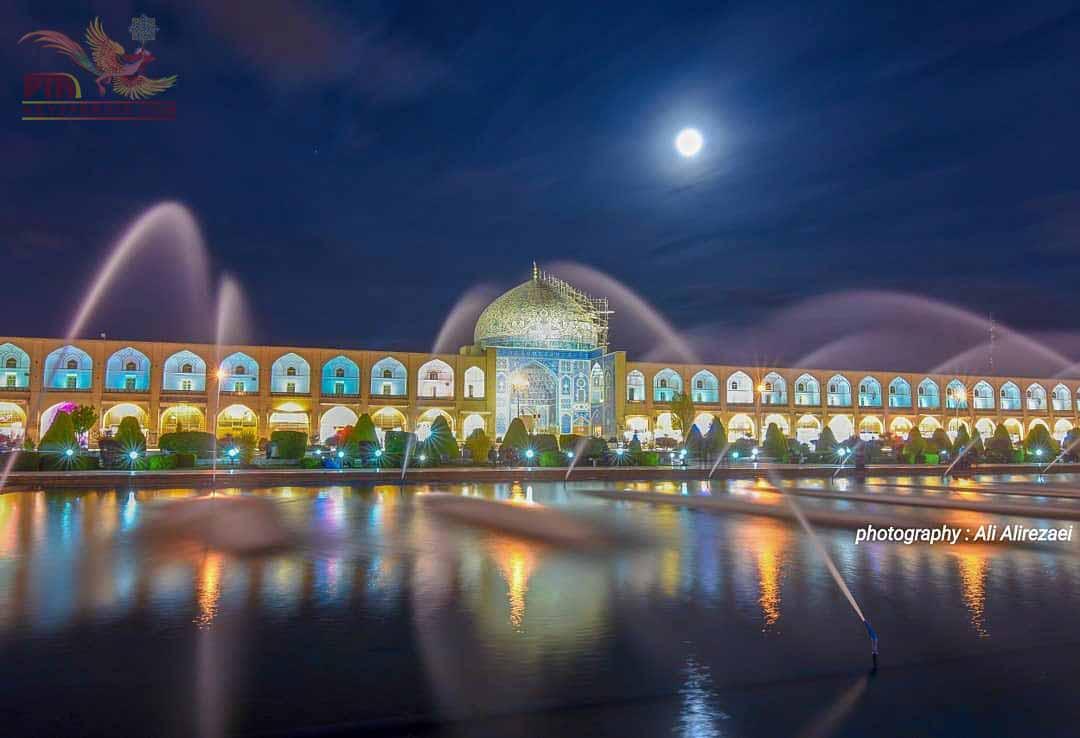
Next, we’ll visit Sheykh Lotfollah Mosque, a masterpiece of Persian architecture, famed for its intricate tilework, elegant dome, and serene, awe-inspiring beauty.
Our visit continues at Isfahan’s Grand Mosque, a stunning example of Persian architecture, where you can admire its magnificent domes, intricate brickwork, and centuries-old artistry that reflect the city’s rich spiritual and cultural heritage.
Our final visit of the day is the Isfahan Music Museum, where you can explore a fascinating collection of traditional instruments and discover the rich musical heritage of the country.
Overnight in Isfahan
Today we set off toward the historic city of Hamedan, traveling through the picturesque towns of Golpayegan, Khansar, Malayer, and Tuyserkan. Along the way, we enjoy scenic landscapes, lush countryside, and the warm hospitality of local communities. This route offers a wonderful glimpse into traditional life, regional culture, and the natural beauty of central and western Iran, turning our journey itself into an enriching and memorable experience.
Overnight in Hamedan
Sightseeing: The Tomb of Esther and Mordechai, Ganj Nameh Inscriptions, Avicenna Mausoleum, Hegmataneh Archaeological Site, Gonbad-e Alavian, and the Tomb of Baba Taher
Hamadan is believed to be one of the oldest cities in Iran. According to the ancient Greek historian Herodotus, it served as the capital of the Median Empire around 700 BCE, and it may have been inhabited as early as 1100 BCE during the Assyrian period. Located in western Iran at the foothills of the 3,574-meter Mount Alvand, Hamadan enjoys a green, mountainous setting that attracts many visitors, especially in summer. Among the city’s most iconic landmarks are the Ganj Nameh inscriptions, the Avicenna Mausoleum, and the Baba Taher monument. While the majority of the population is Persian, the city is also home to a significant Azerbaijani minority.
Our day begins with a visit to the Tomb of Esther and Mordechai, located in the heart of Hamadan. Built of brick and stone, this sacred site is traditionally believed to be the burial place of Queen Esther—wife of King Xerxes (Khashayar Shah)—and her uncle Mordechai. The structure dates back approximately eleven centuries and may have been built atop an earlier site from the 7th century AH. It remains an important pilgrimage site for the Jewish community and is also respected by Muslims.
Next, we visit Ganj Nameh (meaning Treasure Epistle), located about 5 kilometers southwest of Hamadan on the slopes of Mount Alvand. These impressive rock inscriptions were carved into granite during the Achaemenid era. The left inscription was commissioned by Darius the Great (521–485 BCE), and the right by Xerxes the Great (485–465 BCE). Both are written in three ancient languages—Old Persian, Neo-Babylonian, and Neo-Elamite—and begin with praise to Ahura Mazda, describing the lineage and achievements of the kings.
We then continue to the Avicenna Mausoleum, dedicated to the renowned Persian polymath Avicenna (Ibn Sina). The complex includes his tomb, a library, and a small museum, crowned by a distinctive spindle-shaped tower inspired by the Ziyarid-era Kavus Tower. Avicenna authored nearly 450 works across various disciplines, with surviving treatises focusing mainly on philosophy and medicine, cementing his legacy as one of the greatest minds in history.
Our journey proceeds to the Hegmataneh Archaeological Site, dating back to the 6th century BCE and associated with the Median period. The palace was reportedly constructed in 614 BCE under the reign of Cyaxares of Media and Nabopolassar of Babylon. Ancient historians, including Greek sources, mention this grand complex. Recent excavations have uncovered significant remains from both the Median and Achaemenid periods.
Next, we explore Gonbad-e Alavian, a remarkable masterpiece of post-Islamic architecture, renowned for its intricate stucco work. Dating to the late Seljuk period in the 6th century AH, the structure was originally built as a mosque by the Alavian family and later converted into their mausoleum due to its underground crypt. Its exterior bears resemblance to the famous Gonbad-e Sorkh of Maragheh.
Our final visit in Hamadan is the Tomb of Baba Taher, set within a peaceful park adorned with flowers and winding pathways. Baba Taher, also known as Baba Taher-e Oryan (the Naked), was a revered early Persian poet and possibly a wandering dervish. His heartfelt verses continue to resonate deeply within Iranian culture.
Overnight in Hamedan
Sightseeing: Alisadr Cave
Today, we depart Hamadan for Alisadr Cave, the world’s largest water cave and one of Iran’s most remarkable natural attractions.
Ali-Sadr Cave attracts thousands of visitors each year and is renowned for its vast underground waterways and impressive chambers. Archaeological excavations have uncovered ancient artworks, pottery, and vessels dating back nearly 12,000 years. Depictions of animals, hunting scenes, bows, and arrows found along the exit passages suggest that early humans once used the cave as a dwelling.
Historical evidence indicates that the cave was known during the reign of Darius I (521–485 BCE), as confirmed by an ancient inscription near the tunnel entrance. Over time, however, knowledge of this 70-million-year-old cave was lost, and it was only rediscovered in 1963 by Iranian mountaineers. Due to its accessibility and proximity to major cities such as Hamadan, Ali-Sadr has since become a highly recommended destination for travelers from around the world.
Visitors explore the cave primarily by boat, gliding through crystal-clear waters and admiring towering walls that rise up to 40 meters high. The cave features several large, deep lakes and an underground river, making the boat tour a truly unique experience. In 2001, a German-British expedition surveyed the cave and determined its explored length to be approximately 11 kilometers. The main chamber alone measures about 100 meters in length, 50 meters in width, and 40 meters in height.
Overnight in Alisadr region
Sightseeing: Kangavar, Bisotun, Taq-e Bostan (The Garden Arch)
Today we depart Alisadr and travel toward Kermanshah. En route, we stop in the town of Kangavar, where the impressive ruins of an ancient monument rise prominently beside the road. Known as the Temple of Anahita, this majestic structure dates back to the Achaemenid era (404–359 BCE) and was built in honor of Ardevisur Anahita, the goddess and guardian of waters. Kangavar was mentioned in the 1st century CE by the Greek geographer Isidore of Charax as Konkobar, within the ancient province of Ecbatana. The town’s name is believed to derive from the Avestan Kanha-vara, meaning “the enclosure of Kanha.” The temple’s architectural style closely resembles other Achaemenid palaces and temples constructed between 550 and 330 BCE in western Iran.
Continuing along a scenic route that follows the base of a soft, fawn-colored cliff, we reach Bisotun, located about 30 kilometers from Kermanshah near the village of the same name. The site is clustered around a natural spring beneath a towering rock face. High on the cliff, overlooking what was once a major ancient trade route, are the famous Bisotun carvings—positioned to be seen by travelers passing through the region for centuries.
We then proceed to Kermanshah, a city that served as a favored recreational center during the Sassanid era. Set in a mountainous region with a mild climate, Kermanshah Province boasts a rich Paleolithic heritage. Numerous caves containing Paleolithic remains have been surveyed and excavated, particularly in the Bisotun area and north of the city.
Our main visit in Kermanshah is to the extraordinary Taq-e Bostan (The Garden Arch), one of Iran’s most remarkable rock relief complexes. The site features a series of Sassanid-era carvings, some sheltered beneath vaulted stone arches forming natural grottoes. These magnificent reliefs, dating from the 3rd century CE until the advent of Islam, depict royal ceremonies and hunting scenes, showcasing the artistic and cultural achievements of the Sassanid period.
Overnight stay in Kermanshah
Sightseeing: Kamyaran, Palangan Village, Uramanat-e Takht Village, Tomb of Pir Shahriar Urami
Today we depart Kermanshah and travel toward the spectacular village of Uramanat-e Takht, passing through the scenic towns of Kamyaran and Palangan along the way. Palangan, one of Kurdistan’s most picturesque stepped villages, is beautifully set within a narrow valley and is renowned for its traditional stone houses, rich local culture, and breathtaking mountain scenery.
Continuing our journey, we arrive in Uramanat-e Takht, one of the most charming rural destinations in Iranian Kurdistan. Nestled among dramatic mountain landscapes, the village offers panoramic views and exceptional natural beauty. The region is also culturally significant, best known for the annual ancient ceremony honoring Pir Shahriar, a unique and fascinating ritual that draws visitors from across the region. The Sirvan River flows through deep valleys nearby before crossing into Iraq, while the surrounding lands are adorned with walnut, pomegranate, fig, and mulberry trees.
We visit the Tomb of Pir Shahriar Urami, a revered pilgrimage site for locals. Pir Shahriar, the author of The Acquaintance of Pir Shahriar, is believed to have been a Zoroastrian spiritual figure prior to the advent of Islam, and his legacy remains deeply respected in the area.
Overnight stay in Uraman Takht village.
Sightseeing: Takht-e Soleyman
Today we set off for Takab, heading toward the legendary Takht-e Soleyman. Along the way, we enjoy scenic landscapes as we approach this extraordinary UNESCO World Heritage site, a place of ancient history, stunning ruins, and rich cultural heritage. We will explore the fascinating archaeological complex, discovering its sacred fire temple, historic structures, and the beautiful surrounding nature, making it a truly unforgettable experience.
Overnight in Takht-e Soleyman region
Sightseeing: Soltaniyeh Dome
Today we travel to Qazvin, with an excursion to Soltaniyeh, located about 240 kilometers (150 miles) northwest of Tehran. Founded in the early 14th century as the capital of the Mongol Ilkhanid rulers of Iran, Soltaniyeh takes its name from the Islamic title Sultan. In recognition of its outstanding historical value, UNESCO designated Soltaniyeh a World Heritage Site in 2005.
The city reached its peak during the reign of Öljaitü, when it was extensively rebuilt. Artists, craftsmen, and merchants from across the region were summoned to contribute to its development, transforming Soltaniyeh into a thriving cultural and artistic center.
The city’s most remarkable surviving monument is the Mausoleum of Ilkhan Öljaitü, commonly known as the Dome of Soltaniyeh. Constructed between 1302 and 1312 AD, it features the oldest double-shell dome in Iran. Its architectural significance in the Muslim world is often compared to Brunelleschi’s dome in Florence for Christian architecture. The Dome of Soltaniyeh inspired later masterpieces of Islamic architecture, including the Mausoleum of Khoja Ahmed Yasavi and even the Taj Mahal.
Although much of the exterior decoration has been lost over time, the interior remains breathtaking, adorned with exquisite mosaics, faience, and murals. The building’s innovative design has led many to describe it as anticipating the Taj Mahal. A visit to this extraordinary monument offers a vivid glimpse into the historic grandeur of the region.
Overnight in Qazvin
Sightseeing: Alamout Castle, Sa’d al-Saltaneh Caravanserai
Today we travel from Qazvin on an excursion to the historic Alamut Castle. Located in the Alamut region of Daylam, south of the Caspian Sea near the Rudbar area, Alamut was a mountain fortress of great strategic importance. The origins of the fortress date back to the Justanid ruler Vahsudan, who chose this commanding site for its construction.
Alamut remained under Justanid control until 1090 AD, when the Ismaili chief da‘i (missionary) Hasan-i Sabbah took control of the fortress, marking the beginning of the Alamut period in Ismaili history. From 1090 to 1256 AD, Alamut became the center of intense political, religious, and intellectual activity for the Nizari Ismailis. Under Hasan-i Sabbah and his successors, it functioned as the headquarters of their state—a network of strategically placed strongholds scattered across Persia and Syria, surrounded by vast territories controlled by rival powers, particularly the Seljuq Empire.
In 1256, the last ruler of Alamut, Rukn al-Din Khurshah, surrendered the fortress to the invading Mongols. During this conquest, the castle’s famous library was destroyed, resulting in the loss of many valuable historical sources. As a result, much of what is known about this period comes from accounts written by the Ismailis’ opponents.
After the Mongol invasion, Alamut lost its political significance and passed into the hands of various local powers. Today, the fortress lies in ruins, but due to its exceptional historical importance, it is being preserved and developed by the Iranian government as a major tourist attraction.
After our visit, we return to Qazvin. In the evening, we enjoy a night visit to Sa’d al-Saltaneh Caravanserai, the largest covered inner-city caravanserai in Iran. Dating back to the Qajar period, this impressive complex—beautifully illuminated after dark—offers a unique atmosphere with its interconnected courtyards, domed halls, and arcades.
Overnight stay in Qazvin
Sightseeing: Carpet Museum, Sa’d Abad Complex, Reza Abbasi Museum
We drive 2 hours to Tehran and begin the day with a visit to the Carpet Museum of Iran, home to more than 100 outstanding examples of Persian carpets from across the country. Here, we gain insight into the artistry, techniques, and history of Iran’s world-famous hand-woven carpets and rugs.
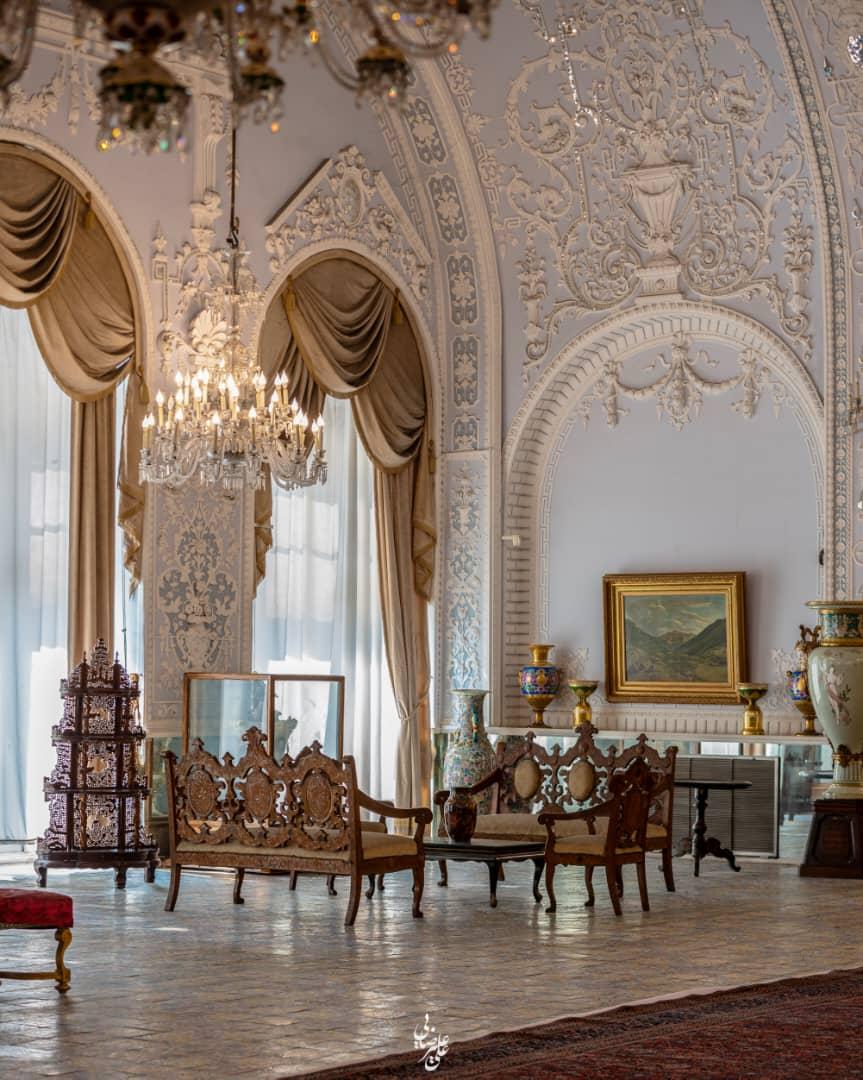
Next, we explore the Sa’d Abad Complex, an expansive cultural and historical site covering approximately 1,100,000 square meters and comprising 18 magnificent palaces, two of which we will visit. Originally developed and inhabited by the Qajar monarchs in the 19th century, the complex was later expanded and became the residence of Reza Shah Pahlavi in the 1920s, followed by his son Mohammad Reza Shah Pahlavi in the 1970s. After the 1979 Revolution, Sa’d Abad was converted into a museum complex. Its grandeur and rich history leave a lasting impression.
We then enjoy lunch at a traditional restaurant, savoring a delicious Iranian dish.
In the afternoon, we visit the Reza Abbasi Museum, located in the Seyed Khandan area. Named after Reza Abbasi, one of the most celebrated artists of the Safavid era, the museum houses an exceptional collection of Persian art spanning from the second millennium BC through the Islamic period, showcasing both pre-Islamic and Islamic masterpieces.
Finally, we transfer to Imam Khomeini International Airport (IKA) for departure from Iran—the land of history, culture, nature, beauty, and warm hospitality, a country sure to leave you with lasting and fond memories.
Note: In this tour, overnight accommodation on this night is not included. Upon request, a hotel near IKA can be arranged for a few hours or for the full night, depending on your departure time.