

In the old days of Persia, pilgrims or other travelers journeyed together usually for mutual protection in deserts or other hostile regions. The travels were done in small or large groups called caravans riding on horses or camels. Each caravan traversed 6 “farsakh” (1 manzel) every day. “Farsakh” is an old Iranian unit for measuring distance, equal to 6.24 kilometers. Passing through one “manzel”, the caravan arrived at a caravansary in which they could stay to rest and relax. Visiting the holy shrine of Imam Reza has long been considered a high priority by Shia Iranians. This journey tries to follow the footsteps of those Shia pilgrims of the old days while having the same comfort of today’s travelers.
Sightseeing: National Museum of Iran, Golestan Palace, Bazaar, National Jewelry Museum
We begin the morning with a visit to the National Museum of Iran, consisting of two main sections: the Museum of Ancient Iran (opened in 1937) and the Museum of the Islamic Era (opened in 1972). Together, they house an extraordinary collection of historical artifacts—including pottery, metalwork, textiles, rare books, and ancient coins—offering a remarkable journey through Iran’s ancient and medieval heritage. Through these displays, we gain a vivid picture of the evolution of civilization in this region.
Our next stop is the magnificent Golestan Palace, the former Qajar royal complex and one of Tehran’s oldest and most celebrated monuments. This UNESCO World Heritage Site includes elegant halls, beautiful gardens, and collections showcasing Iranian craftsmanship as well as European gifts from the 18th and 19th centuries.
We then take a stroll through the bustling Tehran Bazaar, the economic heartbeat of the city. More than just a marketplace, the bazaar is a vibrant social hub where daily life unfolds—people gather, interact, and shape the cultural and political landscape of the city. After our walk, we enjoy lunch at a local restaurant.
Our Tehran sightseeing concludes with a visit to the National Jewelry Museum, home to an unrivaled collection of priceless jewels. Among its treasures is the famed Darya-e-Noor (“Sea of Light”), one of the world’s most renowned diamonds. (The museum is only open on Saturdays to Tuesdays from 13:00 to 16:00)
In the late afternoon, we transfer to the airport for our flight to Bushehr.
Overnight in Bushehr.
Sightseeing: Bushehr city, Persian Gulf, natural attractions of Kharg Island
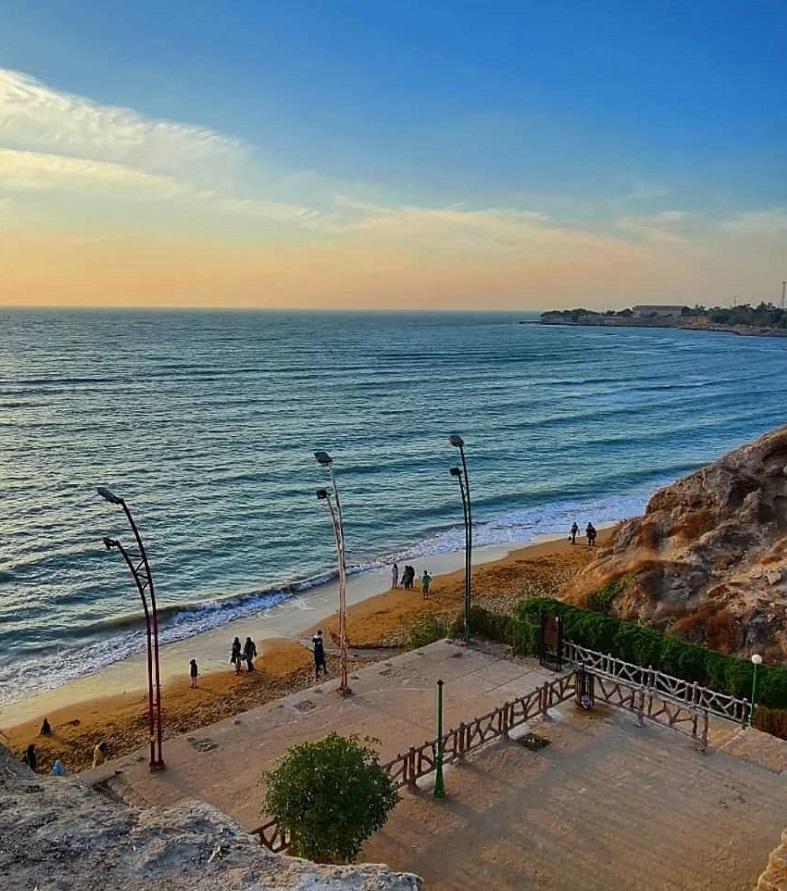
Today we take a tour of Bushehr. The city lies in a vast plain running along the coastal region the Persian Gulf coast of south-western Iran, it is built near the ancient port city of Rishahr/Reshire (Sassanian, Riv Ardasher). It was the chief seaport of the country and is the administrative center of its province. Its location is about 1,218 kilometers (757 mi) south of Tehran. The local climate is humid. Bushehr was the main trade center of Iran in the past centuries. The city structures are traditional in style, modest in proportion and cost.
Due to its lack of rail connection to the interior of the country and its shallow anchorage, it has lost its position as the primary port of Iran. Among the attractions of Bushehr are the coast line, seasonal bazaars, and historical relics of different times. We will also see the beauties of the Persian Gulf.
Then we will visit Kharg Island. Kharg Island is a continental island in the Persian Gulf belonging to Iran. The island is located 25 km (16 mi) off the coast of Iran and 483 km (300 mi) northwest of the Strait of Hormuz. Administered by the adjacent coastal Bushehr Province, Kharg Island provides a sea port for the export of oil and extends Iranian territorial sea claims into the Persian Gulf oil fields.
Stay overnight in Bushehr.
Sightseeing: Bishapur, Chogan Gorge, Anahita Temple
Today we move towards Shiraz. On the way, we will visit Bishapur which is an ancient city situated south of modern Faliyan, on the ancient road between Persis and Elam. The road linked the Sassanid capitals Istakhr (very close to Persepolis) and Ctesiphon.
The next stop will be at ‘Chogan Gorge’ which is a valley with a river north of the ancient city of Bishapur. There are 6 giant rock carvings on walls telling the story of the Roman Empire defeat by the Sassanid king, Shapour II (309 - 379) and also King Bahram II (276–293) conquering Arabs and rebels. At night we arrive in Shiraz and transfer to our hotel. We stay overnight in Shiraz.
Night Optional Tours in Shiraz: Concert tour in Sang-e Siah district, Zoorkhaneh, Baba Kouhi (mountain trekking), Cinema Complex, Walking Tour, Cafe Tour
Sightseeing: Karim Khan Palace, Vakil Mosque, Vakil Bazaar, Saraye Moshir, Tombs of Hafez & Saadi, Ali-Ebn-e-Hamzeh Shrine, Jahan Nama Garden, Eram Garden, Tomb of Khajou-ye Kermani
Shiraz has long been known as a center of enlightenment and culture, serving as one of Iran’s most influential cities for over 2,000 years—and once even its capital. Often celebrated as the heartland of Persian culture, Shiraz evokes images of poetry, gardens, roses, and nightingales.
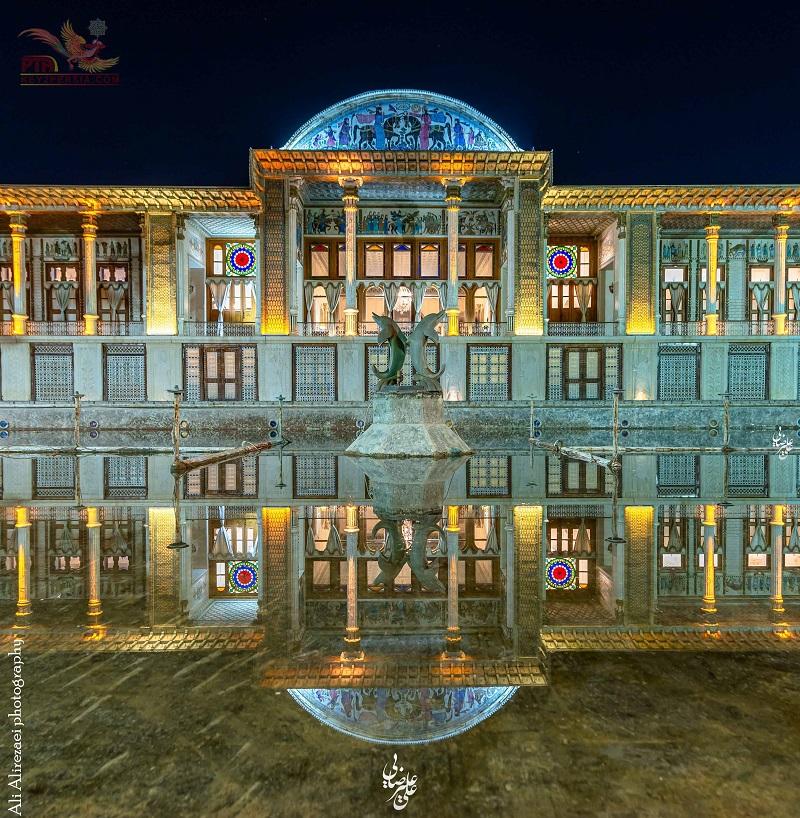
We begin our morning by exploring the highlights from the Zand Dynasty, when Shiraz served as the nation’s capital. Our first stops include the impressive Karim Khan Palace, the elegant Vakil Mosque, the bustling Vakil Bazaar, and Saraye Moshir, known for its beautiful architecture and traditional handicraft shops.
Next, we enjoy a delicious Iranian lunch at one of Shiraz’s traditional restaurants.
This enchanting city is also home to Iran’s most beloved poets. We will visit the tombs of Hafez and Saadi, two literary masters whose words continue to inspire readers around the world.
Hafez, admired for the depth and beauty of his poetry, rests in a tranquil garden setting that exudes peace.
Saadi—poet, philosopher, mystic, and often called the “father of tourism”—traveled widely seven centuries ago and recorded his experiences in his masterpieces Bustan and Golestan, which remain rich sources of wisdom and inspiration.
In the evening, we visit the stunning Eram Garden, a perfect example of a Persian garden and a UNESCO World Heritage Site. We then stop at the beautifully adorned Ali-Ebn-e-Hamzeh Shrine, known for its breathtaking mirror-work. Afterwards, we take a peaceful stroll through Jahan Nama Garden, famous for its towering cypress trees.
We end the day at the tomb of Khajou-ye Kermani, where a panoramic view of Shiraz offers a memorable final impression of this magical city.
Overnight in Shiraz.
Sightseeing: Nasir Al Mulk Mosque, Persepolis, Necropolis
We begin the morning with a visit to the beautiful Nasir Al Mulk Mosque (Pink Mosque), followed by visiting legendary Persepolis, founded by Darius I in 518 BC. Once the ceremonial capital of the Achaemenid Empire, Persepolis was constructed on a vast terrace—partly natural, partly man-made—where the “King of Kings” built an extraordinary complex of palaces inspired by Mesopotamian architecture. Designed not only as a seat of government but also as a spectacular setting for royal ceremonies such as Nowruz, the grandeur and historical significance of its monumental ruins make Persepolis one of the most remarkable archaeological sites in the world.
Next, we visit Necropolis (Naqsh-e Rostam), located just north of Persepolis. This impressive site is home to the rock-cut tombs of Achaemenid kings, carved high into the cliffs of a Mountain. The site also features seven remarkable bas-reliefs from the Elamite and Sassanid periods, offering a fascinating look into Iran’s ancient artistic heritage.
Overnight in Shiraz
Sightseeing: Pasargadae, Abarkuh (Ancient Living Cypress Tree, Icehouse, Gonbad-e Aali, Nizamiyyah School)
Today, we depart Shiraz in the morning and head toward Abarkuh, with our first stop at Pasargadae, the ancient capital of the Achaemenid Empire under Cyrus the Great (559–530 B.C.). Here, we will explore some of its most majestic monuments, including the Tomb of Cyrus the Great, the empire’s founding ruler. This remarkable tomb, set amidst expansive fertile lands, is a masterpiece of ancient architecture and served as a place of worship for followers of multiple religions. Today, it stands as an archaeological treasure and a UNESCO World Heritage Site.
Continuing to Abarkuh, a historic city at an altitude of 1,510 meters, we will visit:
The Ancient Living Cypress Tree, estimated to be 4,500 years old. This venerable tree symbolizes endurance and the harmony between nature and favorable environmental conditions.
The Abarkuh Icehouse, a traditional structure used to store ice year-round before the invention of modern refrigeration. Icehouses often featured underground chambers or insulated buildings near natural ice sources.
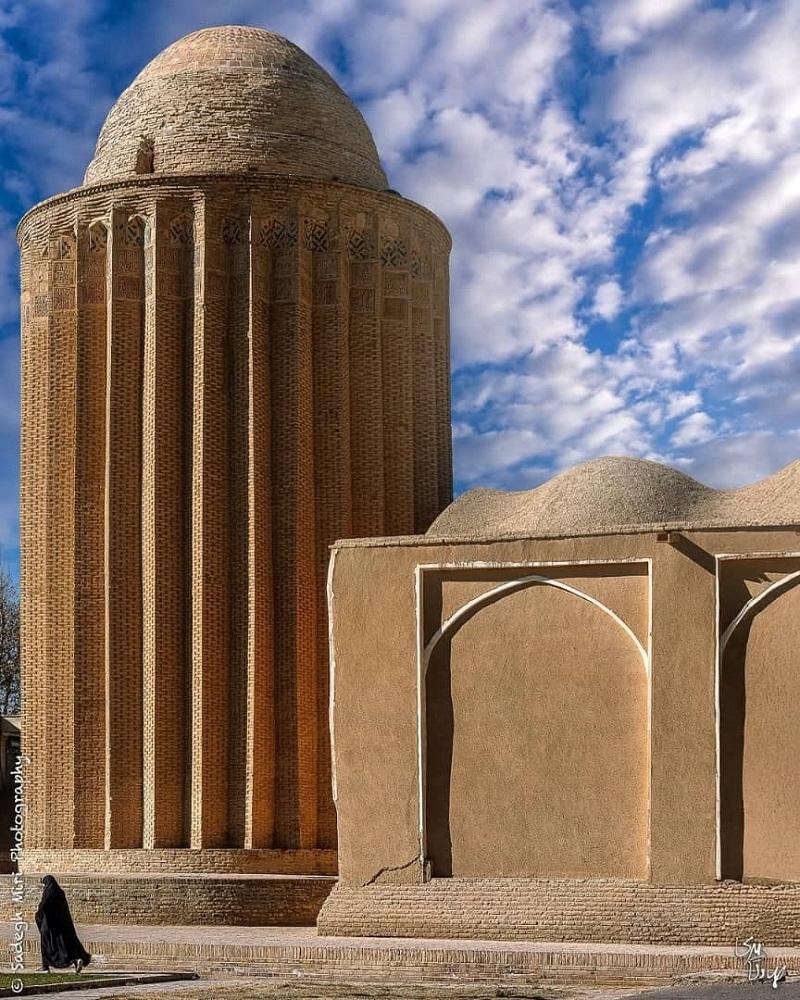
Gonbad-e Aali (Aali Dome), the town’s oldest surviving structure dating back to the 11th century (Dailamite period). This early tomb tower sits atop a hill on the outskirts of Abarkuh.
The Nizamiyyah School, one of the earliest medieval higher education institutions in Iran, founded by Khwaja Nizam al-Mulk during the Seljuk Empire. These Sunni theological schools became models for later Islamic educational institutions.
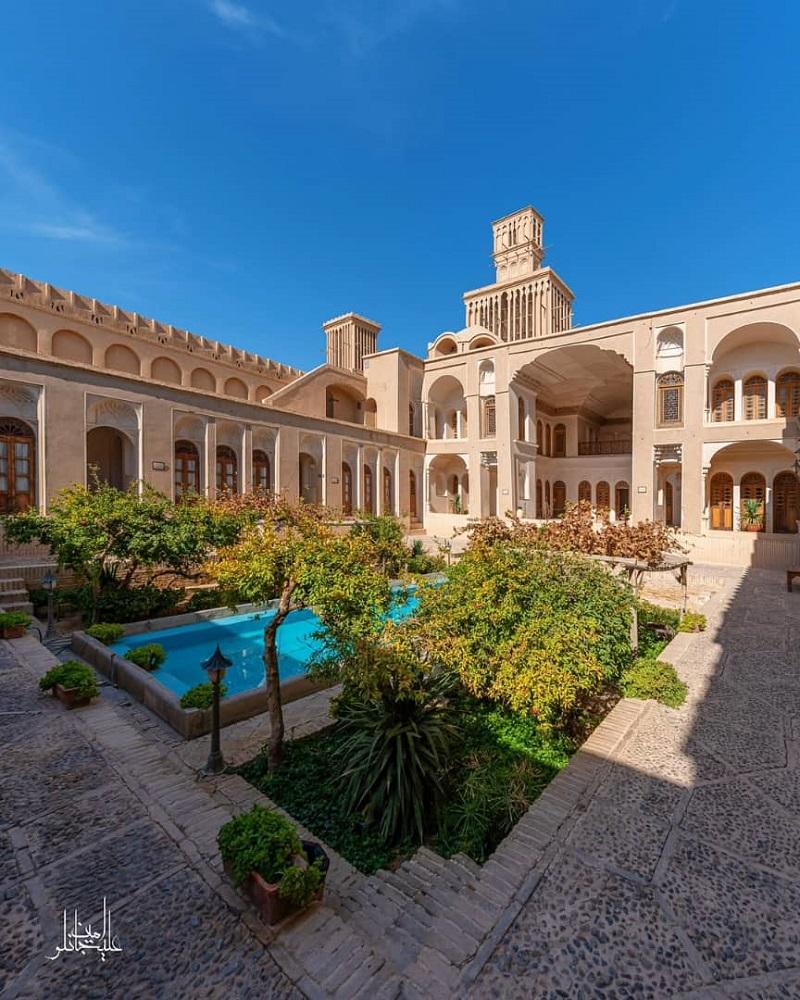
For your overnight stay in Abarkuh, we highly recommend the Aghazadeh Boutique Hotel, one of Iran’s most distinguished traditional hotels, offering an authentic and comfortable experience. If the group is large, we will stay in one of the traditional hotels in Yazd.
Sightseeing: Zoroastrian Towers of Silence & Fire Temple, Amir Chakhmaq Complex, Jame Mosque of Yazd
Night Optional Tours in Yazd : Sindbad or Shabahang desert camp, Chak ckak & kharanagh excursion
Today in Yazd, we will pay a visit to Zoroastrian Towers of Silence; circular raised structures built by Zoroastrians for excarnation (for dead bodies to be exposed to carrion birds), and Fire Temple; the place of worship for Zoroastrians. At night, we will visit Amir Chakhmaq Complex; a prominent structure noted for its symmetrical sunken alcoves. It is a mosque located on a square of the same name. It also contains a caravanserai, a tekyeh (a place where Shiite gather for mourning of Muharram), a bathhouse, a cold water well, and a confectionery. At night, the building is lit up after twilight hours after sun set with orange lighting in the arched alcoves which makes it a spectacle.
We will also explore one of Yazd’s most iconic and awe-inspiring landmarks: the Jame Mosque of Yazd. As we approach this magnificent masterpiece, its towering minarets—the tallest in Iran—rise gracefully above the city, guiding us toward a place where history, faith, and artistry blend seamlessly. Stepping inside, we are welcomed by the mosque’s mesmerizing turquoise-blue tilework, intricate geometric patterns, and a serene courtyard that reflects centuries of devotion and craftsmanship. The stunning main entrance, with its grand portal and dazzling mosaic decorations, is a true testament to the brilliance of Persian-Islamic architecture.
While exploring its calm interior and beautifully illuminated prayer hall, we can feel the timeless spirit of Yazd’s desert culture echoing through every arch and inscription. This visit allows us not only to admire one of Iran’s architectural gems, but also to connect with the rich cultural and spiritual heritage that has shaped this ancient city.
Overnight in Yazd.
Sightseeing: Shah Abbasi Caravanserai, Chak Chak & Kharanaq, Robat-e Posht-e Badam,Bayazeh,
Arusan, Garmeh & Khur villages
Today we hit the road to Mesr, a village in Jandaq Rural District, Isfahan Province. On the way, we will have short stops to enjoy visiting some ancient villages and the road side Shah Abbasi Caravanserai. Located near the city of Ardakan in Yazd Province, Chak Chak serves as a pilgrimage point for pious Zoroastrians. Each year from June 14–18 many thousands of Zoroastrians from Iran, India and other countries flock to the fire temple at Pir-e Sabz. Notable features of Chak Chak include the ever-dripping spring located at the mountain. The actual temple of Chak Chak is a manmade grotto sheltered by two large bronze doors. The shrine enclosure is floored with marble and its walls are darkened by fires kept eternally burning in the sanctuary. The deserted mud-brick village of Kharanaq is crumbling back into the valley out of which it emerged over 1000 years ago.
What remains in this ghost town, 70km north of Yazd, is a Qajar-era mosque, a cylindrical 17thcentury shaking minaret and a caravanserai near the entrance of the village. Shah Abbasi Caravanserai is a road side inn, located in Meybod, Yazd Province. Robat-e Posht-e Badam is a village in Ardakan County, Yazd Province. Bayazeh is a village in Nakhlestan Rural District, Isfahan Province. It was founded more than 2,500 years ago. Bayazeh had been known as the cultural and scientific center of this part of the desert. An ancient old castle (remaining from the Sasanian Empire or before), mosques, houses, covered narrow alleys, and a qanat, are sites that attract tourists. Arusan, Garmeh, and Khur are three other villages in Biabanak Rural District, Isfahan Province.
We stay overnight in Mesr village.
* this camel riding will be arranged based on your desire to how much camel riding you may like.
Sightseeing: Mesr and Jandaq villages
Before the invention of cars and the development of roads, old Iranians used to travel between the cities by camel in small or large groups called Caravans. Today we move from Mesr village to Jandaq by camel in the form of a caravan, and experience the traditional way of travelling in the remote past. We are greatly amused and enjoy the natural beauties along the way.
We stay overnight in Jandaq.
Sightseeing: Tappeh Hessar, Tarikhaneh Mosque
Today we drive to Shahroud. On the way, we will visit Damghan in Semnan Province. It is one of the oldest cities on the Iranian plateau, stretching back 7000 years, and boasts many sites of historic interest. The oldest of these is Tappeh Hessar, lying to the southeast of the city, which holds the ruins of a castle dating from the Sassanid period. The Tarikhaneh is one of the oldest mosques in Iran, built as a fire temple during the Sassanid dynasty it was converted into a mosque after the advent of Islam.
There are also many other historical buildings belonging to Seljuks and other periods. Apart from its historical interest, the city today is mainly known for pistachios and paper almonds (kaghazi) with very thin shells. Damghan shines like a bezel in the desert region. With its ample cultural heritages and authentic background Damghan's ancient civilization is undeniable and each relic in the city can substantiate its genuine past. By rubbing the dust of forgetfulness off this shining bezel we can display Damghan's ancient shining face to the world and introduce it as an important tourism and sightseeing place in Iran.
Overnight in Shahroud.
Sightseeing: Shahroud city, Bastam village, Abr forest
Half-way between the capital and Mashhad, and at the junction with the Gorgan road, sits the modern city of Shahroud, which has grown to absorb the historic town of Bastam situated in the hills a few kilometers to the north. From the north, it is surrounded by the Alborz Mountains, and from the south by the arid salty deserts. The main launch site of the Iranian Space Agency is near Shahroud. It is also well known for unique types of grapes which are cultivated especially in Shahroud. Therefore, this city is called as Grapes-City.
We will visit Shahroud and the beautiful village of Bastam, as well as the tomb of the great theosophist Bayazid Bastami in Bastam and get to know Sufism in Iran. Then we enjoy visiting Abr forest at the foot of Chogholgir mountain range. It’s a beautiful valley covered with dense forests in a short distance to the desert filled with the clouds risen from the moisture of the Caspian Sea.
We stay overnight in Shahroud.
Sightseeing: Sabzevar,the tombs of Khayam & Attar
Today we get a ride to Nishabur. On the way, we will visit Sabzevar. The history of Sabzevar goes back to the 1st millennium BC. Ancient remains include fire-temple 'Azarbarzin' which is still visible. After the Mongol invasion of Iran, the city was the first part of Iran that moved towards its freedom, under the lead of the Sarbedaran movement. In 14th century Timur invaded Iran, and despite the brave defense of Sabzevar's population, he destroyed the city quite completely.
It is now the commercial center for an agricultural region producing grapes and raisins. There is some small-scale industry for food processing, copperware and electric motors. Through the old bazaar of Sabzevar fresh, dried, and preserved fruits and vegetables are exported.
Then we continue all the way to Nishabur.The city was founded in the 3rd century by Shapur I as a Sasanian satrapy capital. Nishapur later became the capital of Tahirid dynasty and was reformed by Abdullah Tahir in 830, and was later selected as the capital of Seljuq dynasty by Tughril in 1037.
From the Abbasid era to the Mongol invasion of Khwarezmia and Eastern Iran, the city evolved into a significant cultural, commercial, and intellectual center within the Islamic world. What remains of old Nishapur region is a 3500-hectare "Kohandejh" area, south of the current city of Nishapur.
We will stop by the tomb of Omar Khayyam, a scholar, mathematician, astronomer, philosopher, and poet from Nishabur. We will also visit the tomb of Attar, a Persian mystic poet and theoretician of Sufism, from Nishabur, who had an immense and lasting influence on Persian Poetry and Sufism.
Overnight in Nishabur.
Sightseeing: the holy shrine of Imam Reza
Night Optional Tours in Mashhad: Shandiz, Torghabeh, Chalidareh, Koh-Sangi Park
Today we hit the road towards Mashhad, the second most populous city in Iran, located in the northeast of the country, close to the borders of Turkmenistan and Afghanistan. The city is most famous and revered for housing the tomb of Imam Reza, the eighth Shia Imam. Every year, millions of pilgrims visit the holy shrine of Imam Reza. Upon our arrival in Mashhad, we head for the holy shrine to pay our tributes to Imam Reza.
This shrine is a live museum in which you can see a wonderful collection of throughout-the-history masterpieces by the best artists of mirror work, stucco work, moqarnas (stalactite work), marquetry, wood carving, stone carving, carpet weaving. Visiting the shrine will give you a real insight into Iranian art and sociology from the remote past to the present.
It is actually a complex containing the mausoleum of Imam Reza, the Goharshad Mosque, a museum, a library, four seminaries, a cemetery, the Razavi University of Islamic Sciences, a dining hall for pilgrims, vast prayer halls, and other buildings. The complex is one of the tourism centers in Iran.
Overnight in Mashhad.
Sightseeing: Astan Quds Razavi Museum, the tomb of Ferdowsi, Harounieh
Today we enjoy a full day tour of the city. We begin the tour with a visit to the Astan Quds Razavi Central Museum,a major museum complex inaugurated in 1964. Its collections contain Islamic art and historical artifacts; the Museum of Quran and Precious Objects, the Museum of Carpets, the Museum of Armaments, the Museum of Coins and Medals, the Museum of Fine Arts, and so on.
Mashhad is the hometown of some of the most significant Iranian literary figures such as Ferdowsi, the Iranian poet of Shahnameh, and Mehdi Akhavan-Sales, the famous contemporary poet. After visiting the Astan Quds Museum, we head for Tous, an ancient city near Mashhad, to visit the tomb of Ferdowsi, the great epic poet of 10th century AD. Ferdowsi wrote the Persian epic Shahnameh (literally "Letter of the King").
This book is as great as the Iliad and the Odyssey of Homer in western literature. Afterwards, we will pay a visit to Harounieh. Located nearly 600 meters from the tomb of Ferdowsi, Harounieh is the only surviving monument from old Tous. It is believed that this magnificent 15th century monument, which has Azeri architecture, was once a Rabat or a mausoleum.
The building is constructed entirely of brick and has no decorations aside from its baroque stucco reliefs. Finally we drive back to Mashhad and stay overnight there.
Sightseeing: Carpet Museum, Sa’d Abad Complex, Reza Abbasi Museum
We start the day at 7 AM and will drive some 3 hours to Tehran and begin the day with a visit to the Carpet Museum of Iran, home to more than 100 outstanding examples of Persian carpets from across the country. Here, we gain insight into the artistry, techniques, and history of Iran’s world-famous hand-woven carpets and rugs.
Next, we explore the Sa’d Abad Complex, an expansive cultural and historical site covering approximately 1,100,000 square meters and comprising 18 magnificent palaces, two of which we will visit. Originally developed and inhabited by the Qajar monarchs in the 19th century, the complex was later expanded and became the residence of Reza Shah Pahlavi in the 1920s, followed by his son Mohammad Reza Shah Pahlavi in the 1970s. After the 1979 Revolution, Sa’d Abad was converted into a museum complex. Its grandeur and rich history leave a lasting impression.
We then enjoy lunch at a traditional restaurant, savoring a delicious Iranian dish.
In the afternoon, we visit the Reza Abbasi Museum, located in the Seyed Khandan area. Named after Reza Abbasi, one of the most celebrated artists of the Safavid era, the museum houses an exceptional collection of Persian art spanning from the second millennium BC through the Islamic period, showcasing both pre-Islamic and Islamic masterpieces.
Finally, we transfer to Imam Khomeini International Airport (IKA) for departure from Iran—the land of history, culture, nature, beauty, and warm hospitality, a country sure to leave you with lasting and fond memories.
Note: In this tour, overnight accommodation on this night is not included. Upon request, a hotel near IKA can be arranged for a few hours or for the full night, depending on your departure time.